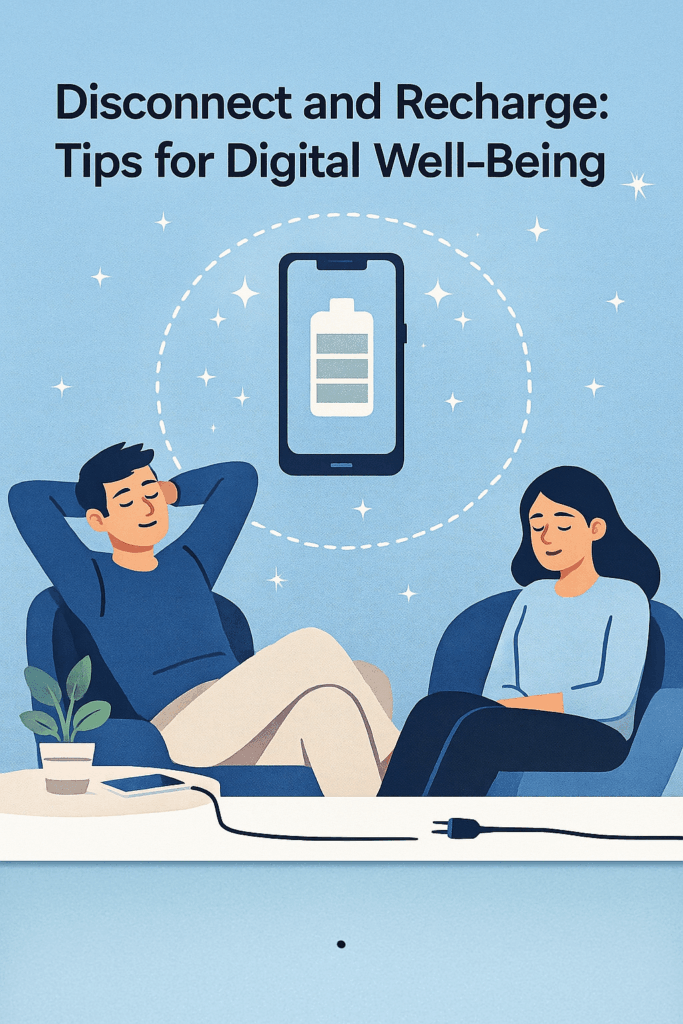
Modern life expects us to be always reachable. That constant connection can quietly eat up attention, increase stress, and make it harder to relax. Disconnecting doesn’t mean quitting the internet — it means choosing when and how to use it so technology serves you, not the other way around.
Here are practical, low-effort strategies to regain control over your attention and feel a little more calm each day.
1. Start with small, visible boundaries
You don’t need dramatic rules. Try simple limits first:
- Designate a 30–60 minute “no-screen” window after dinner.
- Turn off non-essential notifications (social apps, news alerts).
- Keep your phone in another room while you eat or during focused work.
Small, consistent boundaries reduce the mental clutter that builds up over a day.
2. Schedule deliberate “check” times
Instead of reacting to every ping, set times to check messages and feeds — for example, mid-morning, after lunch, and late afternoon. Batch processing communications reduces task switching and keeps your attention on the moment.
3. Replace scrolling with short rituals
When you feel the urge to open your phone out of habit, have a quick alternative ready:
- Stand and stretch for 60 seconds.
- Make a glass of water.
- Do three deep breaths or a one-minute mindful pause.
These tiny rituals interrupt the reflex to scroll and give your brain a reset.
4. Use tech to help (yes, paradoxically)
Set app timers, enable “Do Not Disturb” while you work, or use a focus mode that mutes distractions. Digital well-being tools exist to make self-discipline easier — use them to structure your freedom.
5. Protect morning and evening routines
The first and last hour of the day shape momentum and rest. Try to:
- Avoid screens for the first 30 minutes after waking.
- Skip screens 60 minutes before bed to improve sleep quality.
These small changes quickly improve mood and energy.
6. Be realistic and flexible
Digital habits are social — friends, family, and work expect responses. Communicate simple rules (e.g., “I check messages at 11:00 and 17:00”) so others know when you’ll be available. Flexibility keeps the system sustainable.
Final thought
Disconnecting isn’t about perfection; it’s about making choices that protect your attention and reserve energy for what matters. Start with one small rule this week, keep it for a few days, and see how it changes your sense of calm.