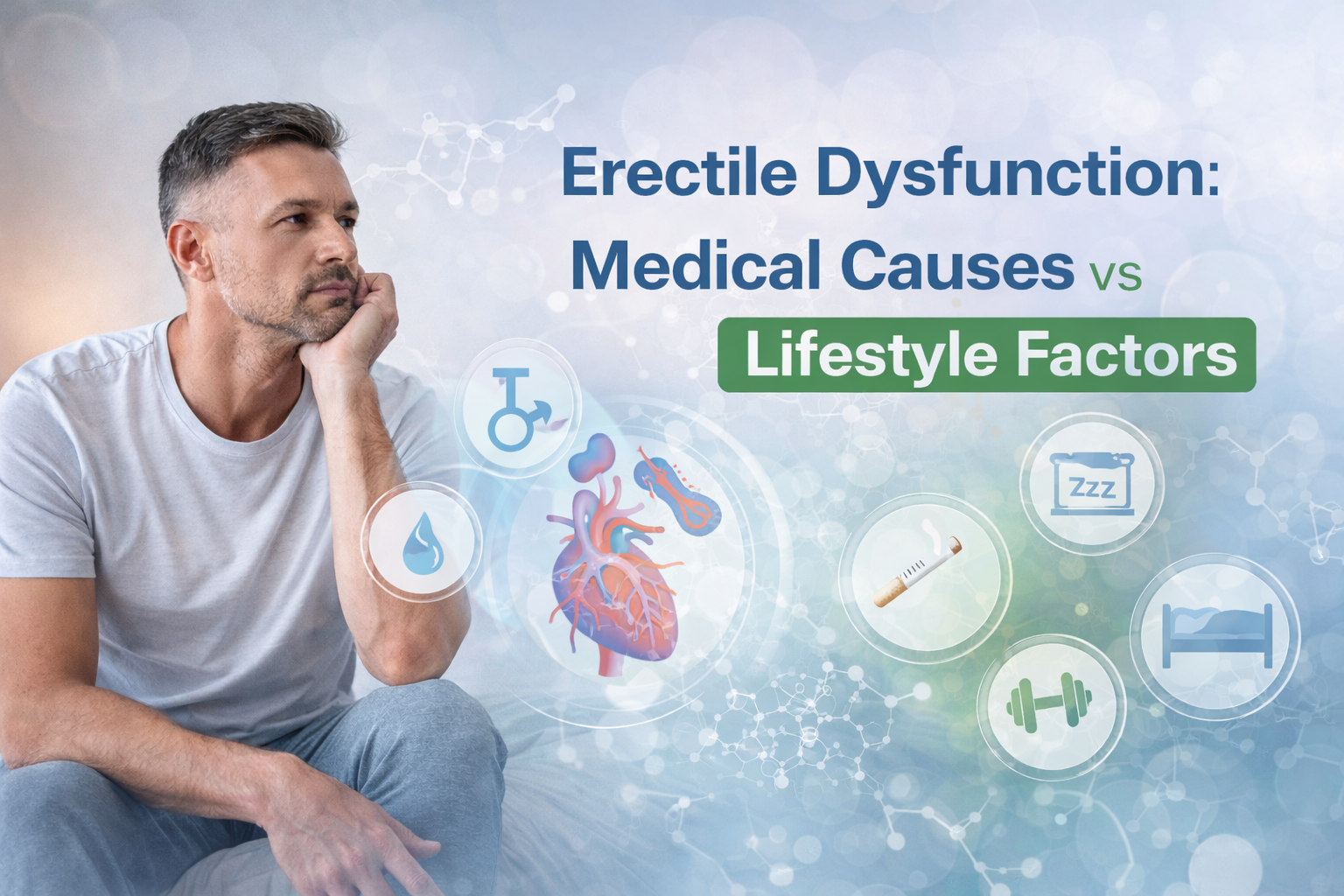
Erectile dysfunction (ED) is a common condition that can affect men at different stages of life. Rather than being a single problem, it is often the result of a combination of medical, psychological, and lifestyle-related factors.
This article provides educational, non-commercial information to help readers understand the differences between medical causes and lifestyle influences related to erectile dysfunction.
👉 The Complete Guide to Male Sexual Health
Understanding Erectile Dysfunction
Erectile dysfunction refers to the persistent difficulty in achieving or maintaining an erection sufficient for sexual activity. Occasional changes are common and may not indicate a health issue, but ongoing difficulties can signal underlying factors that deserve attention.
ED is often linked to overall health rather than isolated sexual function.
Circulatory and Cardiovascular Factors
Healthy blood circulation plays a key role in erectile function. Conditions that affect the cardiovascular system may also influence sexual health.
Blood Flow and Vascular Health
Reduced blood flow can limit the physical processes involved in erectile response. Factors such as high blood pressure, arterial stiffness, and cholesterol imbalance may contribute to circulatory challenges.
👉 How lifestyle choices affect blood flow and male vitality
Heart Health Connection
Because blood vessels throughout the body function similarly, erectile difficulties may sometimes reflect broader cardiovascular health considerations.
Hormonal Balance and Testosterone
Hormones influence energy levels, mood, and sexual interest. Testosterone, in particular, plays a role in male sexual health.
Natural Hormonal Changes
Hormone levels naturally change with age. Sleep quality, stress levels, and overall health can also affect hormonal balance.
Hormones and Sexual Response
When hormonal balance shifts, it may influence desire and physical responsiveness, though experiences vary between individuals.
Stress, Anxiety, and Mental Health
Psychological factors are closely connected to physical responses.
Performance Anxiety
Concerns about sexual performance can create a cycle of stress that interferes with normal function.
Chronic Stress
Long-term stress may influence hormone regulation, sleep, and cardiovascular health, indirectly affecting sexual well-being.
Daily Habits That May Contribute
Lifestyle habits can influence sexual health over time.
Physical Activity
Regular exercise supports circulation, metabolic health, and stress management.
Sleep and Recovery
Adequate sleep is essential for hormonal regulation and mental clarity.
Alcohol and Smoking
Excessive alcohol intake and smoking are known to affect overall health and may influence erectile function over time.
Long-Term Health Considerations
Erectile dysfunction can sometimes be associated with broader health conditions such as diabetes, cardiovascular disease, or metabolic disorders. Because these conditions affect circulation, nerve function, and hormonal balance, addressing overall health often supports long-term well-being.
Early awareness and healthy lifestyle choices may play an important role in maintaining quality of life. When symptoms persist despite lifestyle improvements, a comprehensive clinical TRT evaluation may help determine whether hormonal factors are contributing, alongside other underlying medical considerations.
Educational Disclaimer
This article is for educational and informational purposes only. It does not provide medical advice, diagnosis, or treatment. Individuals should consult a qualified healthcare professional for personalized guidance.
This content is part of our health education initiative. Learn more about our editorial guidelines and transparency policy.
About the Author
Health & wellness content writer focused on educational topics related to male health, lifestyle habits, and well-being.
This content is intended to support health awareness and informed decision-making.