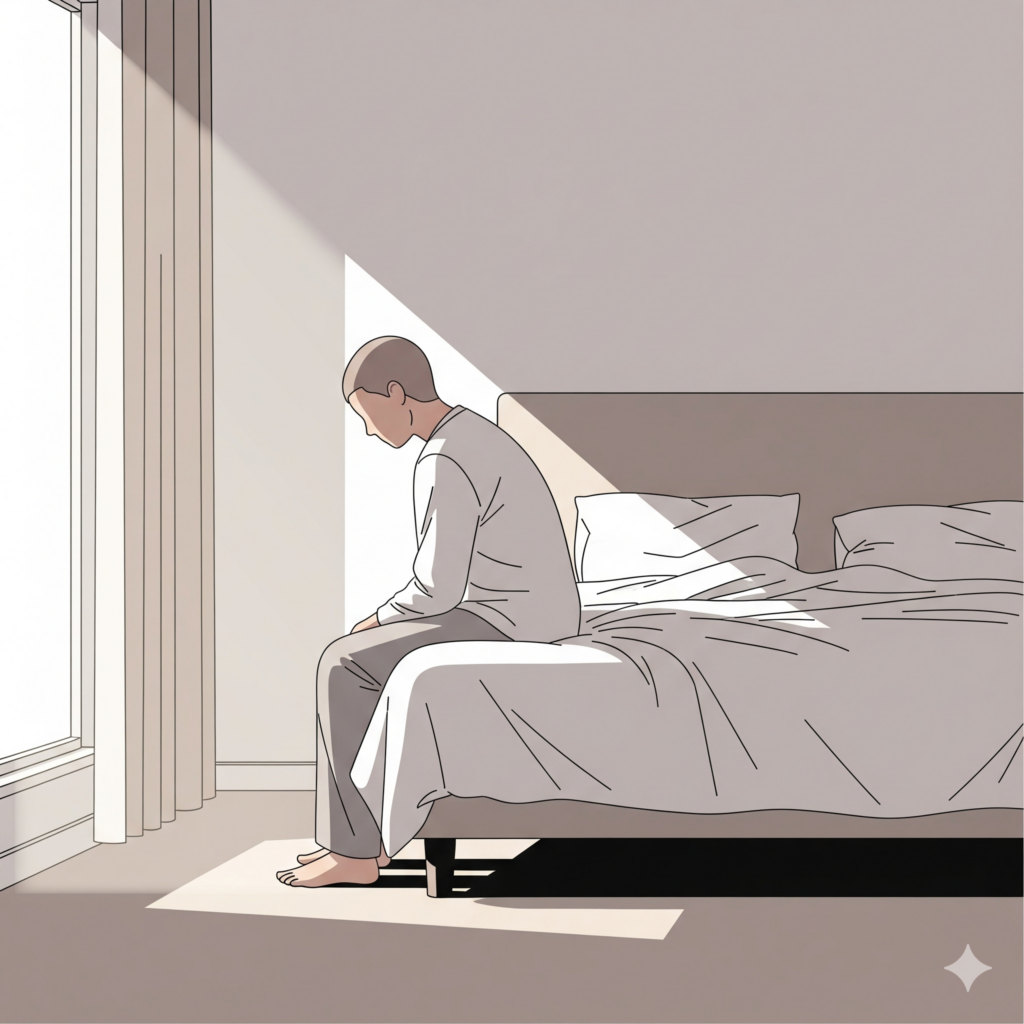
You go to bed at a reasonable hour.
You sleep seven or eight hours.
And yet, you wake up feeling tired — sometimes even more drained than the night before.
If this sounds familiar, you’re not alone. Many people assume that poor energy is always a sleep problem. But the truth is more nuanced. Sleep matters, of course, but it’s only one piece of a much larger puzzle.
Feeling constantly tired despite “doing the right things” is often a sign that something deeper is being overlooked. And the good news is that fixing it usually doesn’t require extreme routines, biohacks, or drastic lifestyle changes.
It starts with understanding what rest really means.
Sleeping More Doesn’t Always Mean Feeling Rested
Sleep duration is easy to measure. You can track it with an app or a smartwatch. But sleep quality — and how your body actually recovers — is much harder to see.
You can spend eight hours in bed and still:
- Wake up mentally foggy
- Feel physically heavy
- Struggle to focus during the day
This happens because rest is not just about being unconscious. It’s about whether your nervous system truly downshifts during the night.
If your mind stays overstimulated, worried, or tense, your body may never fully enter deep recovery mode — even if you technically “slept enough.”
The Difference Between Physical Rest and Mental Recovery
One of the most overlooked aspects of energy is mental load.
You might be resting physically while your mind is still:
- Processing unfinished tasks
- Replaying conversations
- Anticipating future problems
- Constantly switching attention
This kind of background mental activity keeps stress hormones slightly elevated. Over time, it creates a state where you’re never fully rested — just temporarily paused.
That’s why many people feel tired not because they do too much, but because their minds never get a real break.
Mental recovery requires moments of:
- Low stimulation
- Predictability
- Calm focus or intentional disengagement
Without that, sleep becomes shallow and energy slowly erodes.
How Daily Habits Quietly Drain Your Energy
Energy loss rarely comes from one big mistake. It’s usually the result of small, repeated habits that seem harmless on their own.
Some common examples:
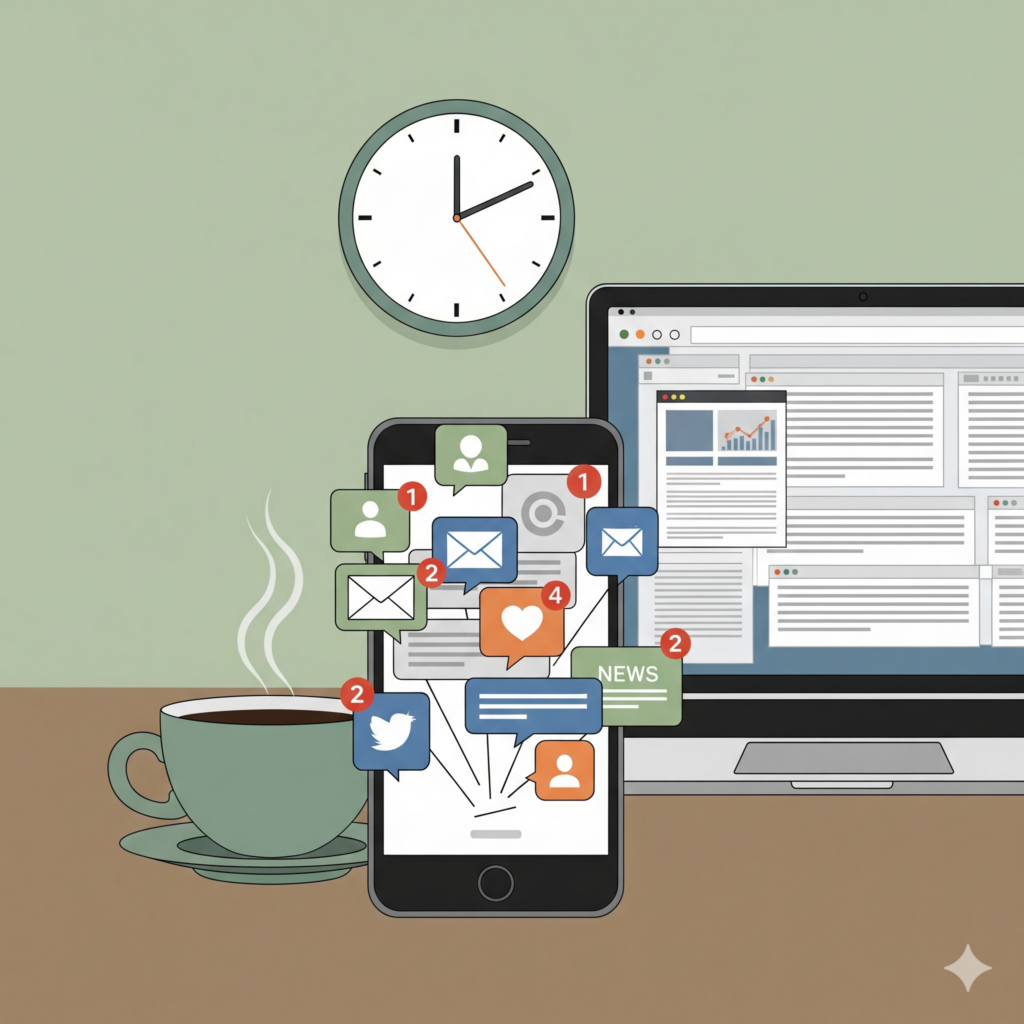
- Constantly checking notifications
- Working without clear stopping points
- Skipping meals or eating inconsistently
- Relying heavily on caffeine to “push through”
- Never fully disconnecting from work or information
None of these habits are dramatic. But together, they keep your system in a state of low-level stress.
Over time, this creates a cycle:
low energy → lower motivation → more effort → more exhaustion.
And the harder you push, the worse it gets.
Stress, Focus, and the Energy–Motivation Loop
Many people think motivation comes first, and energy follows.
In reality, it’s often the opposite.
When energy drops:
- Focus becomes harder
- Tasks feel heavier than they should
- Discipline feels forced
- Motivation disappears
This is why “just be more disciplined” advice often fails. You can’t consistently outwork a depleted system.
Chronic tiredness isn’t a character flaw. It’s usually a signal — one that something in your daily rhythm isn’t aligned with how your body and mind actually function.
The key is not doing more, but doing less — more intentionally.
What Actually Helps (Without Going Extreme)
Improving energy doesn’t require a perfect routine. It requires removing friction and supporting recovery in realistic ways.
Here are a few approaches that consistently help:
1. Create a clear mental shutdown
Before bed, write down:
- What’s done
- What can wait
- What you’ll handle tomorrow
This simple act signals to your brain that it doesn’t need to stay alert all night.
2. Reduce stimulation before sleep
Lower light, fewer screens, calmer input.
Not because screens are “evil,” but because your nervous system needs contrast between day and night.
3. Stabilize your daily rhythm
Consistent wake-up times, regular meals, and predictable breaks help your body regulate energy naturally.
4. Stop chasing constant optimization
You don’t need to optimize everything.
Energy improves when your system feels safe, predictable, and supported — not pressured.
Small, boring improvements done consistently outperform extreme strategies every time.
Final Thoughts
If you’re tired even when you sleep well, it doesn’t mean you’re broken — and it doesn’t mean you’re lazy.
It usually means your system hasn’t been given the conditions it needs to recover fully.
Energy isn’t something you force.
It’s something you allow to return when friction is removed.
Start small. Stay consistent.
And remember: feeling better often begins by doing less, not more.
In persistent cases linked to hormonal deficiency, medical therapies such as TRT may be evaluated.