🧭 Introduction
For years, you’ve probably heard that it takes 21 days to form a new habit — a simple, catchy number that promises quick transformation.
But what if that’s not true?
Recent scientific research shows that habit formation is far more complex — and it doesn’t take 21 days, but closer to 66 days. Let’s explore why this matters, where the 21-day myth came from, and what you can do to build habits that actually last.
🧩 The Origin of the 21-Day Myth
The “21-day rule” traces back to Dr. Maxwell Maltz, a plastic surgeon who, in the 1960s, noticed his patients took about 21 days to get used to their new appearance.
He wrote about this observation in his book Psycho-Cybernetics, and over time, people started repeating it as a universal rule — even though Maltz never claimed it was scientific.
This idea spread quickly through self-help books and motivational content, becoming one of the most persistent myths in personal development.
🔬 What Science Really Says: The 66-Day Rule
In 2009, researchers at University College London (UCL) conducted a study led by Dr. Phillippa Lally, examining how long it actually takes to form a new habit.
Their results?
On average, it took 66 days for a behavior to become automatic — but the range varied greatly: from 18 to 254 days, depending on the person, the habit, and the context.
So the truth is: habit formation isn’t fixed.
Some habits stick quickly (like drinking water in the morning), while others (like exercising daily) can take months.
⚙️ Why 66 Days Makes More Sense
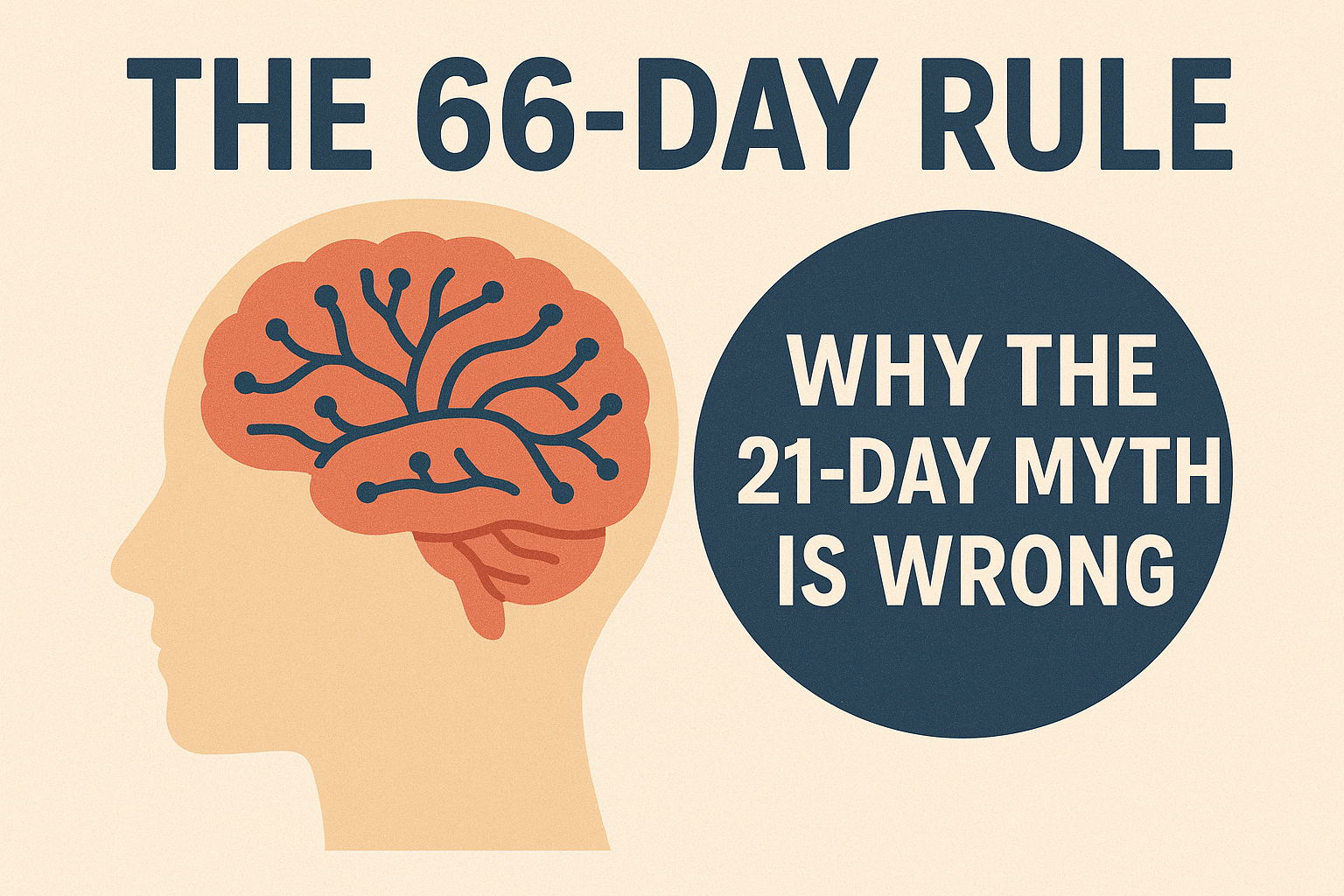
The brain needs repetition and consistency to rewire itself. This process, called neuroplasticity, strengthens new neural pathways until the behavior becomes second nature.
The 66-day timeframe represents a realistic average — long enough to reinforce behavior but short enough to feel achievable.
It’s not about perfection every day, but about showing up consistently.
💡 How to Build Lasting Habits (According to Science)
- Start small: Begin with tiny, manageable actions — for example, doing 5 minutes of stretching, not 1 hour of workout.
- Be consistent: Repetition is key. Missing a day or two doesn’t reset progress, but consistency matters more than intensity.
- Link habits: Attach a new habit to an existing routine — like meditating after brushing your teeth.
- Track your progress: Visual feedback boosts motivation.
- Be patient: Remember — meaningful habits take time, not magic numbers.
🔁 The Mindset Shift
Once you accept that building habits takes around 66 days — not 21 — you can stop feeling frustrated when change doesn’t happen overnight.
Real progress is slow, steady, and science-backed.
So instead of rushing, give your brain the time it needs.
Because lasting change isn’t about speed — it’s about consistency and self-compassion.